Dawn's shared items

Friday, August 1, 2014

Turn Showings into Offers

It’s no secret that competition for buyers is stiff right now.  So as your REALTOR, what’s the best advice I can give you to turn lookers into buyers?

  • First and foremost, price it right from the beginning  your home will get the most attention in the first three weeks on the market.  It has to be priced right in that time frame or potential buyers wont give it a serious look.
  • Second, be willing to drop the price.  If it’s been on the market for more than 30 days without an offer, you’ll need to lower the price to attract new showings.
  • Be flexible about showings.  Everyone who’s been through it knows how difficult it is to have your house ready to show at a moment’s notice-especially if that process takes longer than a few days.  But the easier you make it for people to see your home, the more likely you are to find a buyer.
  • Anticipate the offers.  Know ahead of time what concessions you are willing to make.  Are you willing to leave the appliances or the furniture? How low can you go on price? How quickly can you close, or are you willing to wait?

Friday, July 25, 2014

Prepare Your Home for the Internet

(and make it more aesthetically pleasing at the same time)

Most buyers start shopping for their home online, so photos and virtual tours are vital elements of any marketing plan.  Because the camera sees in two dimensions rather than three, special considerations should be kept in mind as you prepare to photograph your home.  Even if you’re not selling your home, however, these same considerations can make your surroundings more peaceful and aesthetically pleasing.

You’ve heard it before: declutter as much as possible.  Start with the big stuff, and try to remove one or two pieces of furniture from each room to make the space appear larger.

Then rearrange furniture in the room to create a focal point on the wall farthest from the door.  From there, arrange other pieces of furniture in the shape of a triangle.

When the larger pieces are arranged, you can pack up smaller items, leaving three pieces of varying heights on each surface.  For example, an end table might have a lamp (tall), a candle (medium) and a magazine (low).  Include a healthy plant in every room, and add color with a bright pillow on a chair or towels on a rack.

Take some pictures yourself to get an idea of what your home will look like on camera and decide if you need to make any changes such as removing photos from walls or changing window treatments to let in more light.

Once you’ve photographed your home, leave it the way it is so that potential buyers will see the home they are expecting when they come for a showing.

Friday, July 11, 2014

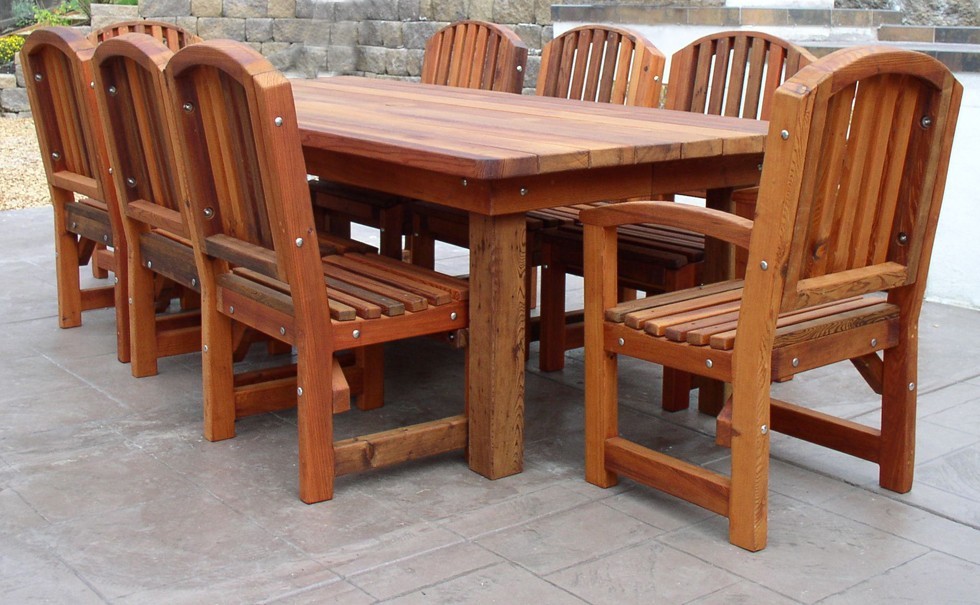
Keeping Outdoor Furniture Looking Great

Outdoor furniture takes more abuse from the elements than the indoor variety, but no one wants to sit on rusty chairs or at tables bearing a later of dirt.  Fortunately, keeping your investment in outdoor furniture isn’t hard-requiring a few easy cleanings each season to remain in top shape.

At the beginning of the season, look over all the furniture, making sure the welds are solid, and tightening all bolts and screws.  Dust everything, soap it down with a solution of mild detergent and water, rinse, and dry thoroughly.

Wicker furniture can generally be cared for with a hose or pressure washer (at low pressure).  A paste wax may be applied to provide a shiny finish; if the wicker is mildewed, try washing it with a solution of 3/4 cup of chlorine bleach in a quart of water.

Plastic furniture can generally be cleaned with a hose or pressure washer as well, though more stubborn stains or mildew can be removed with one cup of chlorine bleach and two cups of detergent in a gallon of water.

Redwood furniture will turn gray without being sealed.  First wash the wood with mild soap and let dry, and sand with a fine sandpaper.  Apply a redwood-specific water-resistant stain in one or two coats.

Metal furniture can be washed with soap and water, but can also be problematic if corrosion has already begun.  If not already bearing a rust-free finish, apply paste wax or naval jelly to prevent rust.  Aluminum furniture can be revived with a vigorous application of steel wool, followed by a layer of paste wax.  Rust or bare spots on wrought-iron furniture will need an application of rust-resistant metal primer as soon as possible.

Tuesday, July 8, 2014

Preparing Your Home for Vacation

If you’re going to be gone for several days or more, remember to take a few precautions to keep your home safe:

  1. Keep a few lights and a radio on automatic timers, and unplug the rest to avoid surge damage from storms.
  2. Leave a key with a neighbor or friend who can check on your home and pick up mail, the newspaper, etc.
  3. Check all windows and doors to make sure they’re locked (an obvious but often overlooked detail).
  4. Install a motion-activated light outside in dark areas to ward off intruders.
  5. Take ultra-expensive jewelry and keepsakes as well as important documents to a safety-deposit box.
  6. Call the alarm company to give them contact information in case anything happens.

Friday, July 4, 2014

Water Wise

Keep your lawn alive with as little water as possible

Like ants at picnics, the warmest months of the summer are sure to be accompanied by requests from the city to reduce our water consumption to conserve the municipal supply.  No one, however, wants to see their investment in their lawn wither in the heat-but homeowners do have a few options for reducing their water use without giving up on their grass.

  • Mow more often.  Taller stalks provide shade for grass roots, and prevent roots from drying out.  (Of course, you may be putting more exhaust into the air, but that’s another matter.)
  • Choose sprinklers carefully to optimize your coverage.  Four smaller sprinklers may be more efficient than one large on if they can water more area with less overlap.  Gardens may be better served by drip irrigation.
  • Water early and often.  Watering in the morning reduces evaporation and avoids plant damage.  Also, watering for shorter periods, with breaks in between, allows water to soak in with less runoff.
  • Mulch is a garden’s friend.  Mulch holds water in and prevents evaporation.
  • Don’t overwater.  Healthy lawns generally need one inch of water per week during the summer.  Make sure water isn't puddling in your lawn or running off into the street-and by all means avoid watering the driveway or sidewalk as much as possible.
  • Invest in an in-ground system, and maintain it.  In-ground systems offer timing systems to prevent overwatering, but require periodic checks for leaking pipes or broken heads.
  • Don’t stress the grass.  If you decide to let your lawn go dormant during the hot weather, let it go.  Watering grass on an occasional basis once it has turned brown only causes stress on the roots.